Explore This Blog

Artículos sobre animación, producción, narrativa y la industria audiovisual.

Animation Costs

How to budget a movie.

Prototypes in Animation

Prototypes that help productions.

How to sell a movie

From project to market.

IA in Movies and Animation

The role of AI in movies and animation.

VFX Getting Worse

A reflection on the evolution of VFX.

Previz & Postviz

How previz and postviz protect productions.

The Metaverse Is a Reality

A look at virtual reality and metaverses.

Perceived Value of Films and Series

reflection on the perceived value of films.

Create or Buy IP?

Buying a famous IP.

What Is a Project Bible?

This document open very big doors.

Keeping a Project Within a Budget

Production Value and Quality

Ethical Framework for Children Animation

Keeping the Kids Safe

How much does animation cost? How much does it cost to make a movie?

By Chaman Animation Studio ‐ Blog Nov. 2025‐ Estimated read: 3 min

Every client wants to know what kind of budget their project requires. Here's a practical, no-nonsense way to approach that big question.

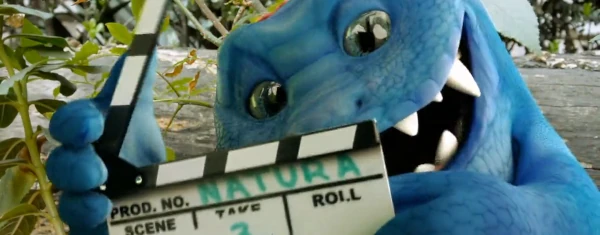
Natura

Every client wants to know what kind of budget their project requires, but every now and then you run into potential clients who ask the big question: How much does it cost to make a movie?

That happened to me again recently. During a meeting, a novelist asked us that exact question as she considered turning her successful book into an animated feature. My answer was: It depends. How much does a house cost?

She leaned back in her chair and immediately understood that the answer wasn't going to be a simple one. "I've asked around and people told me it would cost X," she said. I explained that a Pixar film costs tens of millions of dollars, that we can't make a movie the way a major studio can, and that the X amount she had been quoted was well below what's considered the minimum viable budget for a feature film.

Without a finished script and a proper project breakdown, it's impossible to put together a realistic budget. Still, I told her there's a good starting point: decide what kind of film she wants to make, find a few comparable movies, look up their budgets, and use that to establish a range. Real-estate agents basically follow the same logic when they try to price a home for the market.

"So X isn't enough to make a movie?" she asked. I told her that, based on two or three reference films that came to mind, the minimum viable budget would probably be double.

"Then I'll aim for triple. It's the same effort," she said with a smile. Once we finished the cookies on the table, we wrapped up the meeting and agreed to reconnect later with updates.

Of course, this approach to estimating the cost of animation is pretty rough, but it gives us a general sense of what an animated or film project entails. The real precision -- putting together an actual, grounded budget -- is a different story, and that's something an experienced producer handles later on.


Quick takeaways

  • Start by defining the kind of film you want (scope, style, length).
  • Find comparable films and check their budgets to establish a realistic range.
  • Without a finished script and a producer's breakdown, numbers will be guesswork.
  • Studio-level budgets and independent budgets are radically different?compare like with like.
Back to home

Prototypes in Animation: How Filmmakers Test Their Ideas Before Animating

By Chaman Animation Studio ‐ Blog Nov. 2025‐ Estimated read: 3 min

Prototypes in Animation: How Filmmakers Test Their Ideas Before Animating

blog2

In a recent conversation with a group of future engineers, the topic of prototypes in system development came up. A prototype is, essentially a preliminary version of a product or software that allows users to test something tangible before the final version exists. So I mentioned: "We animators also use prototypes... we just call them something else: storyboards and animatics." And even though our discipline seems more intangible, these visual prototypes serve the exact same purpose.

Storyboard: the first visual prototype

Once the script is ready, the next step is to translate each scene into a series of images, very similar to comic book panels. The goal is to visualize:

  • the idea of each scene,
  • the action,
  • the emotion that needs to be conveyed.

This is where important discoveries often happen. Many times, what seemed clear in the script does not translate well into an image. Emotions, for example, are difficult to convey without falling into clichés.

If something doesn't work, we adjust the storyboard or even go back to the script. It's also the moment to define composition, camera position, and movements that will help tell the story.

Animatic: the prototype that reveals rhythm and narrative

When the storyboard is approved, we move on to the animatic, a very simplified version of the animation. It usually includes temporary voices and music (sometimes recorded by whoever is available in the office... and yes, someone actually became a voice actor thanks to that).

The animatic helps test:

  • the rhythm of the story,
  • the duration of each scene,
  • narrative clarity.

The idea is to identify storytelling issues before investing time in final animation.

Are both always used? Not necessarily

In an interview, the director of Flow, the animated film that won the Oscar, mentioned that he didn't use a storyboard: he went straight from the script to the animatic. Although this is not the norm, it is possible to skip one of these phases... as long as you're willing to accept the risks.

When does it make sense to do so? Mainly when time or budget are extremely limited.

When time is short: our real case

In one of our recent projects, we had just two months to produce a two-minute short film. It was doable, but tight. The client agreed to skip the storyboard and go straight to the animatic, which we developed in one week using very simple elements while the final artwork was being produced in parallel.

The animatic made every scene clear from the beginning, minimizing client revisions. In the end, the project was delivered on time, the client was satisfied, and the animation aired on the scheduled date.

Everything worked because both the client and our team trusted the process.

Storyboards and animatics are essential prototypes in animation and film. They help detect errors, improve storytelling, and align expectations before dedicating time and resources to final production.

In summary

Can they be skipped? Yes-but only when circumstances justify it and the project leaders understand the risks.

Back to home

I have a film, a short, or a series - now how do I sell it?

By Chaman Animation Studio - Blog Nov. 2025 - Estimated read: 4 min

Selling a film can feel mysterious - here's how it really works.

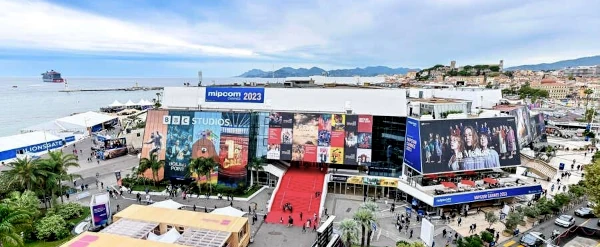
mipcom

Image from MIPCOM.com

This is the million-dollar question... or just a few dollars if your film was made on a super low budget. But don't worry-every filmmaker faces this moment. So, how do you actually sell a film?

Traditionally, filmmakers go to what are called content markets. And what's that? Picture a huge international bazaar, but instead of fruits, toys, or clothes, what's being sold are films. You bring your project, show it to interested people, and if there's a match, a contract gets signed. That contract specifies which regions of the world can distribute your film. And if you don't sell the whole world at once, that's totally fine, you can sell the remaining territories later.

Does it sound easy?

For people with experience, it can be pretty straightforward. But for first-timers, it's overwhelming: lots of people, thousands of projects, and you're there, alone and you don't know anyone. The good news is that over time you build contacts, people start recognizing you, and business opportunities follow. Some people, by luck and brilliance, make an impact right from the start. I imagine something like that might have happened with the creators of Flow, the film that recently won the Oscar.

Where are these markets?

There are events created specifically for buying and selling content, such as MIPCOM, MIP Cancun, the American Film Market, and Kidscreen Summit. Many film festivals also have markets, like Cannes, the Guadalajara International Film Festival (FICG), and Sundance. But keep in mind: not all festivals include a market, so it's worth checking beforehand.

At these events, attendees are usually divided into buyers and sellers. Each group has a clear role. For example, only buyers can see the full catalog of films being offered. Markets also organize short meetings-basically blind dates-where you only get a few minutes to convince a buyer that your project is worth it. Ten minutes on the clock!

But the world is changing, and so is the way films are distributed. Nowadays, there are online platforms that let you sell or rent your film without traveling anywhere. And there are also the well-known aggregators-companies that, for a fee, allow you to upload your file so they can deliver it to digital platforms or streamers.

You've probably wondered why some films on Amazon Prime cost extra even if you already have a subscription. Often it's because they were uploaded through an aggregator, and the film owner shares revenue with Prime every time someone rents or buys it.

Which aggregators exist? It changes every year, but some that have stayed relevant over time are FilmHub and ODMedia.

And what doesn't an aggregator do?

Marketing. They only handle the technical and administrative work of distributing your film, which is already a big help, but promotion is entirely up to you.

How much can you earn by distributing a film?

That varies widely depending on the region. Average prices differ from country to country, and in the end, everything is negotiated. A film won't sell for the same amount in India as in Spain or Canada. But there are reference charts that can help you avoid going in blind.

Back to home

Artificial Intelligence in Movies and Animation

By Chaman Animation Studio – Blog Nov. 2025 – Estimated read: 4 min

About the role of AI in the creation of movies and animation.

mateAI

Automatic matte extraction using AI for a fanfilm

For a couple of years now, we've begun to see how, almost without realizing it, artificial intelligence (AI) made its way into the creation of commercials and short videos. Today, it's common to come across these pieces: some surprising, others unsettling, and many more clearly incomplete. We see characters that still don't understand how many fingers they should have, or digital actors whose movements seem to defy not only physical logic but also emotional intent. It's still a mystery how long clients will continue to bet on these productions while AI reaches maturity... or ends up stagnating in its own limitations, as some experts suggest.

Meanwhile, those of us who are part of the audiovisual industry are trying to adapt to this accelerated transformation. We have no other choice. Our clients, seduced by the idea of doing more with less, are approaching us more and more frequently asking for AI-driven solutions. Just this year, for example, a client who asked us for a quote for an animated series ended up convinced that the option presented to them for an AI-generated movie was better.

Perhaps the first sensible step is to see AI as a tool -a powerful one, yes- but not as a total substitute for human work. Current technologies already allow us to free ourselves from many repetitive and tedious tasks that for years fell on beginner artists or assembly-line studios. AI, when used well, opens up time to think, to create, to direct with greater clarity.

Below are some of the uses of AI that we already have in our studio:

  • Project development with LLMs like ChatGPT/Deepseek
  • Script review with LLM tools
  • Storyboarding with text to image
  • Creation of animatics with image-to-video models
  • Creation of temporary voices for animatics
  • Generation of 3D models from concept art
  • Construction of 3D environments with Gaussian Splatting, using photos or video
  • Automatic rigging of 3D characters
  • Motion capture with just one camera
  • Assisted animation with Cascadeur
  • Script programming for automation through Co-pilot
  • Automatic color correction and grading with Colourlab AI
  • Automatic generation of alpha mattes for compositing
  • And more tools that appear almost every month.

We are in 2025, a year that still feels halfway between awe and uncertainty. At this point, the most honest thing we can promise a client is this: AI can help, it can speed up processes, it can open unexpected creative paths. But art still needs a human hand to decide what to tell and how to tell it.

mateAI

The time will come when we will make movies by pressing a single button.

Back to home

Are Visual Effects in Cinema and Television Getting Worse?

By Chaman Animation Studio – Blog Dec. 2025 – Reading time: 3 min

A reflection on the evolution of visual effects and the current state of the industry.

badVFX

We’ve read that claim in various places on the Internet; however, I remain amazed by the explosion of visual effects in today’s movies.

The visual effects boom

It was during the 1990s when, at last, the studios gained the confidence needed to create any effect after filming. This led to productions that went from having only a few shots with effects to hundreds or even thousands. But how did that growth happen?

Let's crunch some numbers

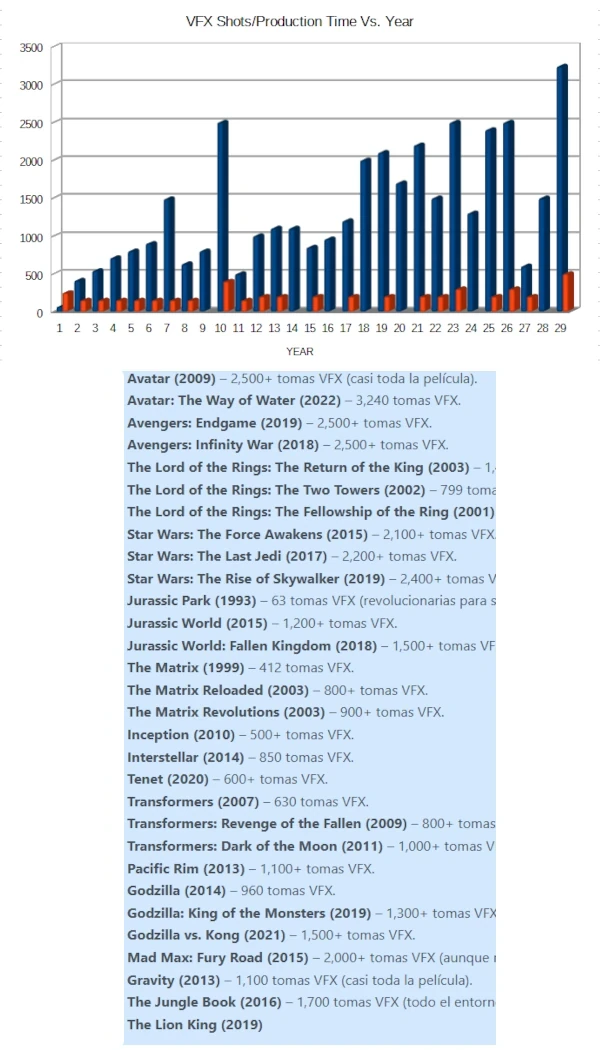
I asked the DeepSeek AI to craft a list of blockbuster films with the number of shots that include visual effects, as well as their production time. DeepSeek warned me that not all films have officially announced those data, but that, using various sources, it is possible to produce an estimate. Our artificial assistant created a list of 30 fairly well–known films, which give us an idea of the state of visual effects at any given moment. The list starts in 1993 with Jurassic Park and ends in 2022 with Avatar: The Way of Water.

It can be observed that the number of shots with visual effects (represented by the blue bars) has been increasing steadily, while the production time of the films (represented by the red bars) has grown to a lesser extent. In other words, the pressure from the public and producers to offer more spectacle is growing, but time resources are not advancing at the same pace. This is what my extremely exhausted colleagues point to as the cause of the final results that some consider deficient.

If you’ll excuse me, I now have to go supervise a render.

graph
Back to Home

Previz and Postviz as Cinematic Production Insurance

By Chaman Animation Studio – Blog Dec. 2025 – Estimated read: 4 min

How previz and postviz protect productions from costly mistakes.

ciguenas

Previsualization (previz) and postvisualization (postviz) are processes that precede major production stages in film and television. They help the director and production team establish the physical layout of all elements before and after shooting.

What Is Previz?

Previz consists of creating 3D animations or storyboards to plan camera angles, camera movements, actor actions, and often, visual effects.

Previsualization helps directors avoid headaches when they discover—before filming—that a pole on set might block a camera movement, or worse, when such issues are not discovered in time. This saves the production both time and money.

Sometimes actor choreography is so complex that it can only be resolved with previz. Think about films that appear to be shot in a single take, like Birdman or 1917. Could they be achieved without previz?

Although a 3D previz may look simple, it requires strong communication between production and the previz department. The team must interpret the technical script, plan each scene accurately, and place cameras with real-world parameters. Today, the process is enhanced by real-time tools such as Unreal Engine.

Postviz

This process takes place immediately after filming. Some teams even work directly on set.

Postviz uses captured footage and adds simplified visual effects or temporary backgrounds. This allows the director to see how the final shot might look and make adjustments before expensive post-production work begins.

In our experience, productions that use both previz and postviz enjoy a smoother and more efficient post pipeline.

Case Study: 3D Storks

Animation: Chaman Animation Studio & Mitika
Production: Kreatta Films

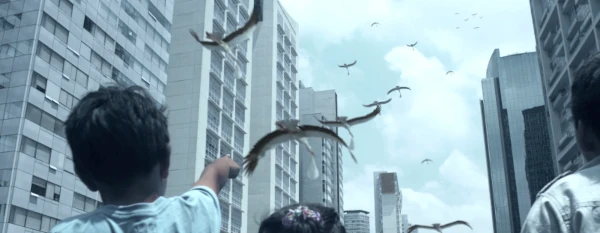
The client needed to add realistic storks to their commercial, but there was no time for previz. For the set, we created a “poor-man's postviz” by placing hand-drawn stork illustrations on acetate sheets in front of the camera. This allowed us to confirm angles before integrating the 3D storks in post-production. With only one shooting day and no chance for retakes, this method prevented costly mistakes.

previs
Back to Home

The Metaverse Is Already Here: What Happened to Virtual Reality?

By Chaman Animation Studio – Blog Dec. 2025 – Estimated read: 4 min

A look at the rise, fall, and surprising evolution of virtual reality and metaverses.

previs

Fortnite x Daft Punk

For years, there has been an effort to popularize virtual reality (VR). However, it still hasn’t achieved truly widespread adoption. Although VR headset sales remain relatively stable, many users abandon their devices after just a few weeks, leaving them to collect dust in a corner.

The Rise and Pause of the Metaverse

Riding this wave of technological enthusiasm, the concept of the metaverse also became a trend. Some even sold virtual land backed by the now forgotten NFTs.

Companies like Meta invested massive amounts of money into building their own metaverse, but recently announced they would slow down that development. It seems corporate attention has shifted toward artificial intelligence instead.

The VR Projects Clients Have Requested

In previous years, a few clients approached us about creating virtual reality applications or metaverse-style experiences. Although the number wasn’t large, the projects generally fell into these categories:

  • Education. Eg: visiting a university campus, interacting with students, and watching video classes inside virtual classrooms.
  • Medicine. Eg: medical visualization in 3D.
  • Industrial training. Eg: identifying parts of a car engine inside an immersive environment.

Additionally, VR continues to be widely used for military and police training.

The Problem With Closed Metaverses

One of the biggest issues with current metaverse platforms is that they are closed ecosystems, with no collaboration or interoperability between them. In other words, each one competes alone for survival, and in the long run, only one or two will likely remain standing.

The Quiet Success Story: Fortnite as a Metaverse

In my view, the most successful metaverse comes from a video game: Fortnite. Over the years, it has hosted:

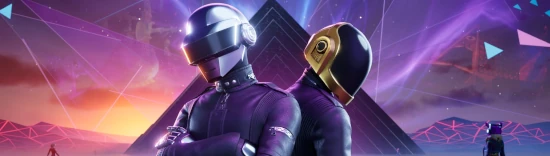
  • Virtual concerts (Daft Punk, Metallica, Ariana Grande, etc.)
  • Short film festivals
  • Large-scale narrative events
  • The premiere of an unreleased chapter of Kill Bill: “The Lost Chapter: Yuki’s Revenge.”

Fortnite has shown that a metaverse isn’t built by technology alone, but by community, events, and meaningful cultural content.

Back to Home

The Perceived Value of Films and Series

By Chaman Animation Studio – Blog Jan. 2026 – Reading time: 4 min

A reflection on how the perceived value of films and series has become increasingly disconnected from the real effort behind their creation.

streaming

Every product carries multiple layers of value, but in today’s entertainment industry, the perceived value of films and series is increasingly disconnected from the effort behind them.

As creators, we like to believe we make art. In reality, we are also running a business. Creativity does not exist in a vacuum and a film needs to make money. As Dov S.-S. Simens bluntly states in From Reel to Deal, a movie only becomes a movie once it is sold.

For decades, the industry relied on a clear economic structure. A theatrical release was followed by a sequence of windows: home video, pay TV, and eventually free-to-air television. This model gave films time to breathe and, crucially, allowed producers to recover their investment over time. The film’s value was reinforced by scarcity and anticipation. Streaming has flattened that structure.

Audiences still love stories, but consumption has become aggressive and disposable. A weekend of horror films? A full season in one sitting? Perfectly normal. The problem is not binge-watching itself, but what it has done to perceived worth. When thousands of hours of content are available for the price of a single monthly subscription, individual films and series inevitably feel cheaper, regardless of how expensive they were to produce.

In my opinion, the industry’s response has been predictable and, in many cases, misguided. More spectacle. Faster hooks. Explosions and chasings in the first five minutes. Opening credits removed, followed by post-credit scenes designed to trap the audience just a little longer. The message is clear: don’t think, don’t wait, just keep watching.

Despite shifting platforms and shrinking attention spans, storytelling remains the only durable currency. Every few years, a film cuts through the noise—not because it had more visual effects, but because it respected its audience and understood the power of fundamentals: character, tension, and meaning. These films remind us that while technology evolves, narrative impact does not.

Streaming may have changed the business model, but it has not rewritten the rules of engagement. Attention is still earned, not forced. Value is still built, not manufactured. In an industry obsessed with speed and volume, the real rebellion is still to tell a story that actually matters.

Back to Main Page

Create or Buy IP? A Story Every Producer Eventually Faces

By Chaman Animation Studio – Blog Jan. 2026 – Reading time: 5 min

Buying a famous character won’t save a bad deal.

Creating your own won’t save a bad idea either.

A few years ago, my friends at the animation studio Mítika acquired the image rights to Blue Demon, one of Mexico’s most iconic wrestlers and movie stars. The plan was ambitious: turn a legendary figure into an animated series. Contracts were signed, payments were made, and the announcement even made it into the newspapers.

A great character deserves a great story, and the series script was written by acclaimed young adult author Antonio Malpica. Creatively, everything worked. Technically, everything was possible. Business wise, not so much.

Over time, it became clear that while we could produce the series without major obstacles, the contract left very little room to recover the investment. The character was powerful, but the framework around it was too tight. So we made a hard decision: we walked away and created something of our own.

That decision led to Red Legend, an action series built around original characters we fully owned. It was presented at the Annecy Festival film market, and it went on to attract attention in the Asian market and, more importantly, taught us a lasting lesson about intellectual property.

Why Intellectual Property Really Matters

When you acquire an IP, you’re not just buying a story, you’re accepting boundaries. Some are wide open. Others are surprisingly narrow.

Everyone has great ideas. Very few survive the journey to the screen. When a story has already proven itself, it becomes attractive to producers. Stephen King famously licensed some of his works to unknown filmmakers for a symbolic dollar, simply to help them (On Writing: A Memoir of the Craft, 2010).

The Freedom (and Fear) of Creating Your Own IP

Creating your own IP means total creative freedom and total responsibility. You own the world, the characters, and the future of the project. But passion doesn’t guarantee profit.

If it works, the possibilities are endless: sequels, spin-offs, new markets—all without asking permission. If it doesn’t, the loss is entirely yours.

There’s also another risk: originality itself. It’s often said that all stories have already been told, and there’s always the possibility that someone has already explored a similar idea, opening the door to potential legal conflict.

Testing Ideas Before They Test You

Great ideas shouldn’t rely on instinct alone. Tools like focus groups help creators listen before they launch. From early concept art to finished pilots, testing allows you to spot problems while they’re still fixable.

With Red Legend, we showed early character designs to children within our target age group, which led to several important adjustments before moving forward.

So what’s the better choice: building your own IP or working with an existing one? There’s no universal answer. Only strategy, timing, and clarity. In film and animation, IP isn’t just a creative decision, it’s a business philosophy.

Back to Home

What Is a Project Bible? Is It Good for Anything?

By Chaman Animation Studio – Blog Jan. 2026 – Estimated read: 4 min

Why this small document can sometimes open very big doors.

Project Bible example

It’s a very common document in television and animation used to sell a concept to anyone we want involved. In this case, I’m referring to a bible created to present a project (a pitch), because there are other types of project bibles as well.

A project bible highlights all the relevant information, such as character descriptions and designs, the story arc per episode and for the overall series, the tone of the story, the narrative world, production costs, number of episodes, and more.

A project bible is a living document that evolves as the project matures. At first, it might just be a couple of pages printed at an internet café; later, with more funding, it can even become a professionally printed book using online printing services. At co-production forums, it’s very common to talk with creators who bring their bible and show it around — and it’s the only copy they carry. I’ve even been given a beautifully bound project bible as a gift because I was being considered to take part in that project.

So, is creating a project bible a must?

Every case is different, and talent and luck always go hand in hand. A well-known example is the pitch from the creators of SpongeBob SquarePants. It’s said their presentation was so strong that, with just a poster of the main character, Nickelodeon signed the contract to produce it. And it’s a series that, decades later, is still alive.

In my case, we secured a co-production deal for the project Red Legend after meeting with a businessman in a meeting that lasted barely ten minutes. At that moment, the project bible wasn’t necessary because he was immediately drawn to the poster we had in our exhibition space in Annecy. What followed was an intense conversation about numbers and finances — so intense that I didn’t even get to open the project bible. We shook hands and started the partnership with the co-producer.

Because in this industry, you never really know what’s coming, but you have to be ready when opportunity walks through the door. And when that happens, your bible isn’t paper: it’s a loaded weapon.

Have you ever made a project bible?

Back to Home

Keeping a Project Within a Budget

By Chaman Animation Studio – Blog Feb. 2026 – Reading time: 4 min

Production Value vs. Quality in Audiovisual Productions.

With a limited budget to produce animation or video, is it possible to create something of good quality that can sell my product? Absolutely. Many times in the audiovisual industry we talk about quality without using the term correctly; what we actually mean is production value.

It has happened that clients ask for animations “like Avatar” or “Bluey” without realizing that implies a high budget. So, as animators, we offer options in styles and animation techniques that achieve similar results with less cost and production time. Production value can be maintained with limited budgets when key elements of the production process are protected and when it’s agreed with the client which elements are not necessary and only increase costs. These decisions are not always pleasing to the client, but it’s necessary for everyone to compromise during the production process.

What helps maintain production value?

  • Good art design
  • Strong visual language
  • Solid sound conditions
  • Well-planned, controlled lighting

What does not help production value?

  • Constant iterations and revisions during the process
  • Changes not considered from the beginning
  • Unplanned experimentation with ideas and processes

Sometimes a client wants animation “like Pixar,” but the budget only allows for limited animation. That shift in “quality” is not necessarily bad; it’s realistic, and good results can still be achieved.

On a project we did with Samsung not long ago, we had very little time to produce a two-minute machinima-Roblox-style story. The release date couldn’t be missed; there was no margin for error. The client suggested using graphic elements we already had from a previous project. This saved us much of the design and modeling process (weeks), and we began animating in the second week. The project was delivered on time and, I believe, without anyone doubting that it would be.

In the end, if the product doesn’t work for the client, it doesn’t work for us either.

Watch the project here

Back to Home

Philosophical and Ethical Framework for Audiovisual Production for Children

By Chaman Animation Studio – Blog Feb. 2026 – Reading time: 7 min

Doing the good things for the kids.

Those of us who work in audiovisual production for children and adolescents have a legal and ethical responsibility to be mindful of what we show them. We always feel pressure to create something sellable, something that can be monetized to recover our investment and that of our clients or producers. On more than one occasion I have had to reject projects because they simply do not align with universal children's rights, ranging from simple issues to truly repugnant things. Because if we protect our children, we protect ourselves as well. I have always wanted my children to watch my productions with pride, and I have had to learn more about this subject, which is why I take new courses on these topics every year.

I am not going to mention the animated series or films known for falling short regarding children's rights, but I will suggest to anyone interested in producing for little ones to take a look at Bluey (Ludo Studio), possibly one of the best-written series in decades.

These rights are recognized by the United Nations, but not all countries have signed the treaties; therefore, we see some programs that may be very successful and fun, but are not good for our children. I have no problem with "edutainment" productions, each project can lean more toward entertainment than education, or vice versa, but there should be certain non-negotiable points for all of us.

PHILOSOPHICAL AND ETHICAL FRAMEWORK

Chaman Animation Studio - Responsible Storytelling for Children

1. Statement of Principles

I) At Chaman Animation, we conceive audiovisual work as a formative, emotional, and cultural experience.
II) We recognize children and adolescents as full subjects of rights, intelligence, and critical capacity.
III) We do not produce content solely to “entertain children.” What we do is create stories that engage with their complexity.

2. Narrative Philosophy

2.1 Conflict with Dignity

Conflict is the heart of storytelling. However:

  • We do not use systematic humiliation as a comedic device.
  • We do not glorify violence or domination.
  • We do not reduce child characters to functional stereotypes.

All narrative tension must always lead to transformation, not to the degradation of the individual.

2.2 Childhood Intelligence

At Chaman Animation Studio, we start from the premise that children understand more than adults tend to assume. Therefore:

  • We avoid explicit moralizing.
  • We prioritize dramatic coherence over didactic messaging.
  • We allow emotional contradiction.
  • We design stories in which ambiguity is processable.
2.3 Protagonistic Agency

Our child characters:

  • Make meaningful decisions.
  • Make mistakes.
  • Face consequences.
  • Actively impact their environment.

They are never passive spectators of the adult world.

3. Cultural Commitment

Chaman Animation Studio, from Mexico to the world, assumes:

  • Complex, non-folklorized cultural representation.
  • Organic integration of diversity.
  • Identity construction without exoticization.
  • Narratives that strengthen community and cooperation.

We do not represent cultures as decoration; we inhabit them narratively.

4. Aesthetic and Sensory Responsibility

As a studio with a strong visual and technical emphasis:

  • We design rhythm that allows cognitive processing.
  • We avoid constant overstimulation as a retention mechanism.
  • We care for the emotional legibility of characters.
  • We understand that audiovisual language also educates.

Form is ethical.

5. Commitment to the Immersive Experience

In immersive projects, responsibility increases. Chaman Animation Studio commits to:

  • Designing experiences that generate wonder without saturation.
  • Integrating narrative with physical space in a coherent way.
  • Protecting emotional safety in multisensory environments.
  • Using technology in service of the story, not as a substitute for content.

6. Internal Evaluation at Chaman Animation Studio

Every project will be reviewed under five axes:

  1. Narrative dignity
  2. Child agency
  3. Dramatic coherence
  4. Responsible cultural representation
  5. Formative emotional impact

A project that does not meet these principles must be reconsidered.

Back to Home